From Dependencies to Decisions: Strengthening Resilience with Impact Data
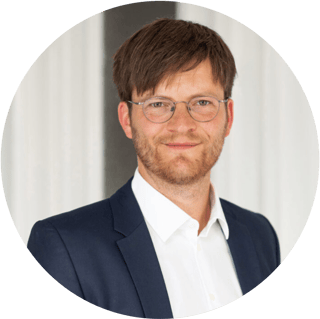
Dr. Richard Scholz
Head of Impact Analysis
Dear Readers,
Recent economic shocks have shown how deeply interconnected companies are through global markets, suppliers, and prices. Disruptions in one part of the world can quickly create ripple effects elsewhere. It is therefore increasingly critical for organizations to understand their dependencies in order to enhance the resilience and long-term stability of their operations and supply chains.
Impact Accounting can provide these insights. It helps identify vulnerabilities, prioritize action and foster more effective collaboration with partners across the value chain. In this edition of Shape It With Data, we explore how leading companies are applying Impact Accounting to strengthen their risk management, supplier engagement, and cross-industry collaboration.
Enjoy the read!
Best wishes,
A Broader View of Value Creation
Impact Accounting offers a basis for identifying where dependencies are concentrated and how impacts are connected. It incorporates social and environmental externalities that influence value creation and highlights critical areas of reliance across suppliers, regions, and product categories.
It also shows where alternative sourcing options should be considered and where dialogue with business partners is most relevant. The resulting insights inform risk management, materiality assessments, and investment decisions, among other aspects.
Case Study: Turning Sustainability Data into Action with SAP
Our latest case study with SAP explores how Impact Accounting translates sustainability information into a basis for decision-making and more informed action.
How it works:
Robust impact analysis lays the foundation for effective action. It shows where social, environmental, and economic impacts arise across geographic regions and throughout the different tiers of the value chain. Valuation in monetary terms adds an analytical lens, helping organizations assess the significance of these impacts and understand how they relate to one another.
Benchmarking makes results easier to interpret. Comparing impacts with industry averages provides the context needed to assess performance. It highlights strengths, reveals challenges, and identifies areas that deserve particular attention.
Embedding insights into decision-making creates the greatest value. Incorporating these findings into core management processes such as sustainability steering, due diligence, and reporting turns analysis into action.
In this way, the results help create transparency, set clear priorities, and focus measures where they can have the greatest impact.
Free Masterclass – Moving from Scope 3 Challenges to Joint Action April 15, 2026 | 4:00–5:00 PM CET | Online
Scope 3 emissions illustrate the value of a shared data foundation that enables companies and suppliers to plan ahead together. Since these emissions occur outside a company’s own operations, progress often requires close engagement with business partners.
In our upcoming Masterclass, experts from Evonik and Takeda will share practical approaches to reducing Scope 3 emissions in the pharmaceutical value chain. WifOR Institute will complement the discussion with industry benchmarks, highlighting common hotspots and areas where joint action is especially important.
Speakers:
Jessica Vieira – Head of Environmental Sustainability Operations and Business Excellence, Takeda
Ranjan Fletcher – Manager Sustainability Development Health Care, Evonik
Paulina Roßnagel – Senior Researcher for Impact Analysis and Scope 3 Expert, WifOR Institute
Join us to learn how spend-based Scope 3 mapping enables strategic prioritization, where supplier dialogue is essential, and how one structured analysis can support CBAM, LkSG, and CSRD compliance at the same time.
Beyond supporting companies in practice, WifOR Institute also contributes to the development of frameworks and standards that shape how impacts are measured, valued, and addressed globally.
WifOR Institute’s CEO Prof. Dennis Ostwald has been appointed to the Impact Value Standards Board (IVSB), hosted by the Capitals Coalition, which brings together international expertise to support the development of a global standard. Prof. Ostwald also recently contributed to an expert commission at the German Federal Ministry for Digital Transformation and Government Modernisation, where he emphasized the importance of a holistic, evidence-based approach to policymaking.
Dr. Zarko Kalamov and Magdalena Müller, both Impact Analysis Researchers at WifOR, have joined the Enlarged Stakeholder Board of Biodiversa+ for the current mandate period. Biodiversa+ is the European Biodiversity Partnership, which supports biodiversity research with an impact on policy and society.
WifOR Institute, Ludwigsplatz 6, 64283 Darmstadt, Germany

.png?upscale=true&width=340&upscale=true&name=MicrosoftTeams-image%20(40).png)


